Raphael’s House (April 2026)



Every Saturday morning, I wake up before the sun fully rises and begin the ninety-minute journey to Raphael’s House. The drive is long, but somewhere between the quiet roads and the slowly brightening sky, I remind myself why I keep going back. At Raphael’s House, time moves differently. Progress is not measured in grades, awards, or numbers, but in eye contact, trust, laughter, and the smallest moments of connection.
When I first started volunteering with children with autism and developmental disabilities, I worried that I would not know how to communicate with them. I quickly learned that communication is much more than words. One child tugging at my sleeve to show me a toy, another leaning quietly against my shoulder, or a sudden burst of laughter during playtime spoke more honestly than conversations ever could.
One girl with bright red glasses and pigtails especially changed the way I think about patience and love. At first, she rarely looked directly at me. Some days, she seemed lost in her own world, carefully stacking toys or repeating the same movements again and again. Instead of trying to pull her out of that world, I learned to step into it with her. We sat on the floor together, folded clothes together, and played simple games under the warm afternoon sunlight. Slowly, she began to smile when she saw me walk into the room. That smile felt like trust being handed to me in the gentlest way possible.
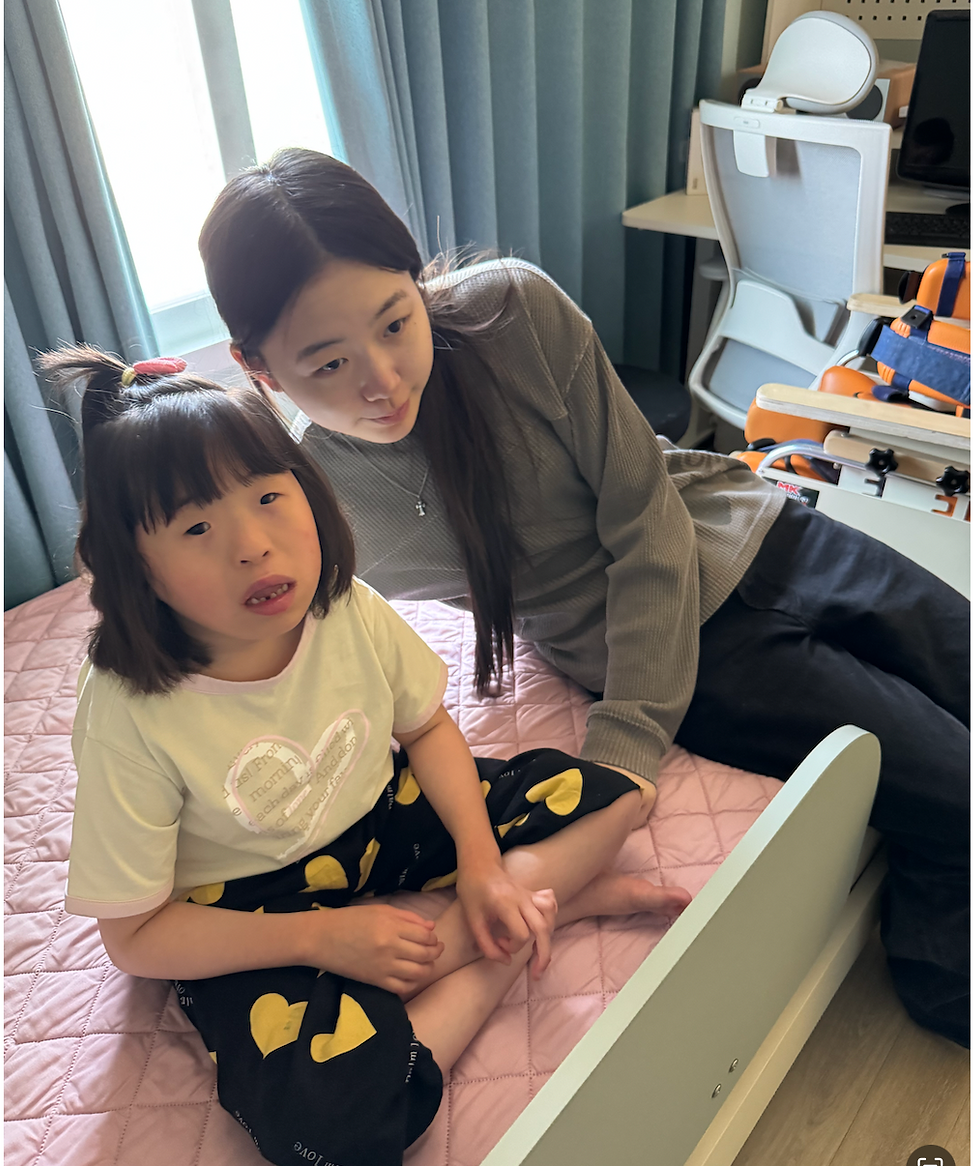
Another child communicated mostly through expressions and sounds rather than sentences. During one visit, I sat beside her on a small bed while she watched a video. She suddenly reached for my hand and held it tightly without saying anything. In that quiet moment, I realized that presence itself can be comforting. I did not need perfect words or special training to make a difference. I only needed consistency, patience, and genuine care.
At Raphael’s House, I also witnessed the extraordinary strength of caregivers and families. The environment could be physically and emotionally exhausting, yet there was warmth everywhere: nurses adjusting wheelchairs with tenderness, volunteers singing songs during difficult moments, and children finding joy in the smallest things. These experiences humbled me. They reminded me how easily society overlooks people whose lives do not fit conventional definitions of “normal,” and how important it is to create spaces where every individual is treated with dignity and love.
The ninety-minute drive home always feels shorter. I carry with me the children’s laughter, their small victories, and the lessons they unknowingly teach me every week. Volunteering at Raphael’s House has not simply shown me how to help others; it has changed the way I understand human connection. I learned that compassion is not dramatic or loud. Sometimes, it looks like sitting quietly on the floor beside a child, waiting patiently until they are ready to let you into their world.


Comments